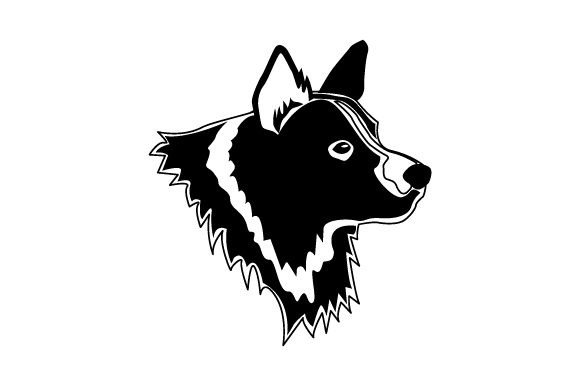
Collie Dog Head, Icon
As a designer who’s stitched hundreds of dog-themed embroidery files for Etsy shops, boutique apparel lines, and custom baby gifts, I opened Collie Dog Head, Icon with quiet curiosity—not hype. I wasn’t looking for “cute.” I was looking for workable: clean lines that translate to thread, balanced negative space for breathability on fabric, and a silhouette that reads instantly at 2.5 inches wide on a linen tea towel or 1.75 inches high on a baby onesie cuff.
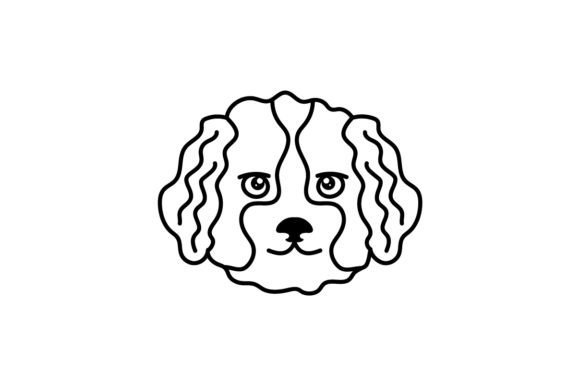
First impression? Calm confidence. This isn’t a cartoonish, exaggerated collie—it’s an icon: simplified but unmistakably collie. The wedge-shaped head, the subtle curve of the muzzle, the gentle slope of the forehead, and the delicate suggestion of the feathered ears all land with restraint. There’s no fussy detailing—no individual fur strands, no eyelashes, no collar. That’s intentional, and it’s smart. Collie Dog Head, Icon doesn’t try to do too much. It does one thing well: represent the breed’s noble, gentle spirit in a scalable, stitch-friendly shape.
I tested it last week on a natural cotton-linen blend tote bag for a local pet boutique client. We stitched it centered just below the top seam, using soft ecru thread on oat-colored fabric. The result? Crisp, legible, and quietly elegant—like a signature, not a sticker. Customers paused to trace the outline with their fingers. That’s the sign of a design that feels handmade *and* intentional—not mass-produced, but professionally considered.
Where Collie Dog Head, Icon shines is in context-sensitive projects. On a heavyweight organic cotton sweatshirt? It anchors beautifully—no stitch crowding, no distortion. On a lightweight gauzy baby blanket? Use a light tear-away stabilizer and reduce density slightly; the open silhouette holds up without stiffness. As an embroidered patch? Perfect. Its clean outer edge stitches cleanly with satin stitch, and the interior can be filled with smooth, low-density fill stitch—no puckering, even on curved backing fabric.
It’s also ideal for layered storytelling. Pair it with minimalist text like “Always Home” or “Shepherd My Heart” on a nursery pillow cover—and suddenly you’ve got heirloom-level sentiment without clutter. For holiday embroidery? Stitch it in deep forest green on cream wool-blend stockings, or in metallic gold on charcoal velvet tree skirts. The icon’s neutrality makes it seasonally flexible, not locked into spring or summer.
That said—Collie Dog Head, Icon isn’t magic on every surface. On highly textured fabrics like bouclé or thick terry cloth, test first: the subtle contours of the muzzle and ear base may soften. On stretchy knits (think ribbed baby caps or performance tees), use cutaway + topping, and avoid placing it over seams or high-movement zones—those gentle curves don’t love distortion. And on dark fabric? Check your thread contrast carefully. A pale heather gray thread might disappear on navy; go one tone lighter or add a subtle white outline in running stitch if needed.
For small hoop sizes—especially under 4×4”—this design scales down reliably. I ran it at 1.25" on a denim pocket and it retained clarity. No tiny eyes or fragile antlers to vanish in stitching. That’s huge for crafters selling personalized keychains or enamel pin backings alongside embroidered items. It also works cleanly in black-and-white mockups, which matters if you’re building digital product previews for your Etsy shop or Instagram shop tab.
What really elevates Collie Dog Head, Icon for commercial use is its visual honesty. It doesn’t shout. It invites. That builds trust—especially with customers buying personalized gifts. When someone orders a custom embroidered apron for their collie-owning friend, they’re not just buying thread on fabric. They’re buying recognition, affection, and shared understanding. This icon delivers that quietly, consistently.
As a craft business owner, I also appreciate how easily it integrates into branding. Use the SVG version to adapt it for laser-cut wood ornaments or vinyl decals for shop signage. Drop the transparent PNG into Canva for printable gift tags or packaging stickers. The EPS and DXF? Handy if you expand into sublimation or CNC-cut appliqué later. It’s not just an embroidery file—it’s a versatile design asset.
A few practical notes before you stitch:
- Always test on scrap fabric first—especially if pairing with a new stabilizer or thread brand.
- Review stitch density before hooping. If your machine defaults to high fill density, dial it back 10–15% for breathable results on apparel.
- Confirm hoop size compatibility. While it scales well, double-check the native dimensions in your embroidery software—some versions may default larger than expected.
- Inspect small details in the design preview: look for stray nodes, overlapping paths, or unconnected segments that could cause jump stitches.
- Test both light and dark backgrounds in your mockup workflow—thread behavior changes dramatically between them.
- Use appropriate stabilizer: cutaway for knits, tear-away for stable wovens, and fusible + topping for delicate or shiny fabrics.
- Verify licensing terms before selling finished embroidered items or bundling the file in digital product kits—commercial use rights aren’t automatic, even with craft-focused files.
Finally—don’t overlook how this icon supports your voice as a maker. In a market flooded with overdesigned, overly literal animal motifs, Collie Dog Head, Icon stands out by stepping back. It leaves room for the fabric, the stitch texture, the wearer’s story. That’s what makes it feel handmade, not automated. That’s what turns a simple embroidered patch into a meaningful keepsake. That’s why, after years of reviewing embroidery files for real projects—not just pixels—I keep coming back to icons like this one: quiet, capable, and deeply respectful of the craft.