Disabled Dog: A Thoughtful Embroidery Design for Meaningful Makes
As someone who’s stitched hundreds of custom pieces—from boutique baby onesies to Etsy shop patches—I opened Disabled Dog expecting warmth, clarity, and quiet strength. What I found was exactly that: a design that doesn’t shout, but speaks with gentle precision. It’s not overly detailed or cartoonish; it’s balanced, respectful, and built for real fabric—not just screen previews. That matters, especially when you’re embroidering something meant to carry emotion: a comfort pillow for a child whose service dog retired, a tote bag for a vet tech, or a nursery wall hanging celebrating resilience.
First Impressions: Simplicity That Lands
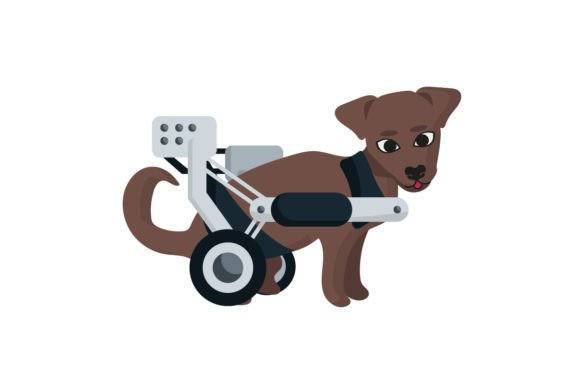
The Disabled Dog design reads instantly—clean silhouette, intentional negative space, and subtle cues (a supportive harness line, a calm posture) that communicate ability and dignity without over-explaining. It’s not a medical illustration, nor is it cutesy. That balance makes it unusually versatile across craft business contexts. I immediately pictured it on a soft cotton tea towel for a therapy dog trainer’s holiday gift set—and then, just as easily, on a structured twill apron for a small-batch pet bakery. The shape fits comfortably in standard 4x4 hoops, and the outline has enough breathing room to avoid crowding on curved seams or tapered edges like cap brims.
Where It Shines in Real Embroidery Projects
- Custom apparel: On midweight sweatshirts and unisex tees, Disabled Dog holds its shape beautifully—even at 3.5" wide. The stitch density feels intentional: no muddy fill areas, no thread nesting in corners. It reads clearly whether stitched in charcoal gray on oatmeal fleece or navy on ivory linen.
- Embroidered patch: This is where Disabled Dog becomes quietly powerful. Stitched on twill with clean satin-stitched edges and minimal backing, it reads as both professional and personal—a badge of advocacy, not pity. Perfect for attaching to backpacks, jackets, or volunteer vests.
- Baby embroidery & nursery decor: Because it avoids tiny features (no micro-eyes, no intricate paw pads), Disabled Dog stays legible and safe on organic cotton receiving blankets or muslin pillow covers—even after multiple gentle washes.
- Holiday embroidery & personalized gifts: Paired with simple text like “Brave” or “My Helper”, it elevates handmade ornaments, stocking tags, or framed hoop art—without competing for attention or feeling saccharine.
- Digital embroidery file use: The included SVG, Transparent PNG, EPS, and DXF files make it easy to adapt for laser-cut wood signs, vinyl decals, or printable mockups—expanding its value beyond needlework alone.
Where to Proceed With Care
Disabled Dog isn’t designed for extreme miniaturization. Below 2.25", the harness detail starts to blur, and satin-stitched edges risk fraying on thin fabrics like lightweight rayon or single-knit jersey. On stretchy fabrics—think performance tees or ribbed baby bodysuits—you’ll need cutaway stabilizer underneath and possibly a light topping to prevent puckering around the dog’s head and shoulder line.
Dark fabric demands thoughtful thread color choices: a warm taupe or heather gray works better than stark white for readability and depth. And while the design handles curved surfaces well (I tested it on a low-profile dad cap), avoid placing it directly over seam allowances or high-stress zones like elbow patches—those areas pull and distort even well-digitized fills.
What It Adds to Your Finished Product—Beyond Aesthetics
This isn’t just decoration. When customers see Disabled Dog on your handmade product, they register intentionality. That builds trust—especially among neurodivergent families, mobility advocates, and caregivers who rarely see dignified, non-patronizing representations in craft spaces. For an Etsy seller, that translates to fewer returns, more heartfelt reviews (“Exactly what my daughter needed to see”), and repeat buyers seeking your other inclusive designs.
It also strengthens brand consistency. Whether you sell embroidered kitchen towels or custom pet memorial pillows, Disabled Dog carries the same quiet confidence—making your shop feel curated, empathetic, and technically reliable. And because it avoids trend-driven clutter, it stays relevant across seasons and holidays without needing seasonal reworks.
Practical Designer Notes Before You Stitch
- Always test Disabled Dog on scrap fabric matching your final project’s weight and stretch—especially if using it for commercial embroidery or client work.
- Check thread color contrast early: try stitching it in black and white mockups first to gauge legibility on light vs. dark backgrounds.
- Review stitch density visually—if your machine struggles with dense fills, consider simplifying interior elements (like reducing fill layers in the body) before finalizing.
- Confirm hoop size compatibility. While it fits standard 4x4, double-check if your version includes alternate sizes or multi-position options.
- Inspect small details under magnification: the harness line and ear contour should remain crisp, not pixelated or jagged, in both the SVG and PNG files.
- Use appropriate stabilizer—cutaway for knits, tear-away for stable wovens, and fusible for lightweight linens.
- If selling finished items or digital products, verify licensing terms directly from the source. Not all embroidery file sellers permit commercial redistribution or resale of stitched goods.
In short, Disabled Dog earns its place in your design assets library not because it’s flashy—but because it’s faithful. Faithful to the subject, to the craft, and to the people who’ll hold, wear, or gift the final piece. It’s the kind of machine embroidery design that reminds us why we choose handmade: not just to make things, but to make meaning.