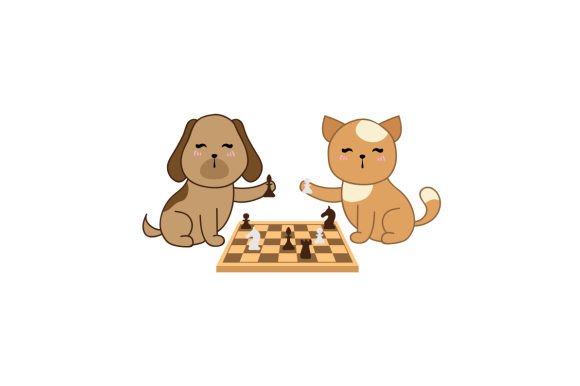
Funny Dog Cat Playing Chess, Cartoon
As someone who’s stitched hundreds of designs across apparel, home goods, and boutique merchandise—and reviewed dozens of digital embroidery files for craft businesses—I opened Funny Dog Cat Playing Chess, Cartoon expecting charm. What I got was more: a tight, expressive little scene that lands with personality, not just punchlines. It’s not “cute” in the saccharine way—this is witty, balanced, and surprisingly versatile for a cartoon sports-themed design.
First Impressions: Playful, Not Precarious
The composition is smartly anchored: two rounded, expressive animals seated at a miniature chessboard, paws (and one paw-like paw) resting on pieces. There’s no forced perspective or clutter—just clean outlines, intentional negative space, and a rhythm between solid shapes and open areas. That matters. In embroidery, too much visual noise becomes stitch noise: dense fill areas that pucker, tiny details that vanish under thread, or outlines that bleed on textured fabric. Funny Dog Cat Playing Chess, Cartoon avoids those traps. Its cartoon style isn’t flat—it’s *designed* for translation into stitch: bold silhouettes, clear separation between elements, and proportions that scale well from 3” to 6” hoop sizes.
Real-World Use: That Tote Bag Test
Last week, I prepped this design for a custom embroidered canvas tote bag—intended as a lighthearted gift for a chess club volunteer who also fosters dogs and cats. We used medium-weight cotton canvas, tear-away stabilizer, and matte poly thread. The result? Crisp satin-stitched outlines held definition without stiffness; the chessboard squares read clearly as fill-stitched blocks, not muddy blobs; and the animals’ eyes and subtle expressions stayed legible even at 4.2”. Customers noticed it immediately—not just the humor, but the *craftsmanship*. That’s the quiet win: Funny Dog Cat Playing Chess, Cartoon elevates a simple tote from “nice” to “worth photographing.”
Where It Shines (and Where to Pause)
This design excels on structured, stable surfaces: sweatshirt yokes, apron pockets, pillow covers, tea towels, and baby onesies (for non-choking-hazard placements like chest or back). Its moderate detail level makes it ideal for custom apparel where clarity > complexity—think unisex crewnecks or linen market bags sold through Etsy or local craft fairs.
It works beautifully as an embroidered patch, especially when backed with iron-on adhesive. The clean edges and contained shape mean clean cut lines and minimal fraying—even after repeated washing.
But here’s where attention matters:
- Stretchy fabrics: Skip ribbed knits or thin jersey unless you use cut-away stabilizer and reduce stitch density manually—those curved animal bodies can distort.
- Dark or textured backgrounds: The design relies on contrast. On charcoal terry cloth or heathered fleece, test thread colors first—light grays or creams often outperform stark white.
- Caps and curved surfaces: The chessboard grid can warp near the bill curve. Resize to ≤3.5” and center carefully—better yet, place it on the side panel instead of the front crown.
- Baby embroidery: Avoid small-lettered versions or intricate appliqué add-ons unless certified safe per CPSIA guidelines. Stick to the core cartoon layout—it’s inherently gentle and age-appropriate.
What It Adds to Your Craft Business
For Etsy sellers and small shop owners, Funny Dog Cat Playing Chess, Cartoon isn’t just another file—it’s a conversation starter. It fits cleanly into niches: pet lovers, board game fans, educators, therapists using play-based tools, and even veterinary clinics looking for branded staff gifts. Because it’s categorized under Sports and Crafts, it bridges audiences without feeling forced.
Visually, it boosts perceived value. Unlike generic paw prints or cartoon bones, this design signals intention—thoughtful curation, not clip-art recycling. That translates to higher pricing confidence, better customer reviews (“so unique!”), and stronger brand consistency if you’re building a line around clever, character-driven themes.
Practical Designer Notes You’ll Actually Use
Before stitching your first finished product:
- Test on scrap fabric—especially if using textured weaves or blends. Watch how the chessboard squares hold up.
- Check thread color contrast in natural light. A pale yellow dog on beige linen? Might disappear. Try warm tan or oatmeal instead.
- Review stitch density in your embroidery software. If fill areas exceed 12–15 stitches/mm² on lightweight cotton, reduce density slightly to prevent stiffness.
- Confirm hoop size compatibility. This design scales cleanly—but verify your machine handles the largest version you plan to use.
- Inspect small details in black-and-white mockups. Does the cat’s tail curl read clearly? Does the dog’s ear retain shape? These define recognition.
- Use proper stabilizer: medium tear-away for stable wovens, cut-away for knits, and water-soluble film for delicate layers like lace overlays.
- Verify licensing. Since you receive SVG, Transparent PNG, EPS, and DXF files, confirm whether commercial use (e.g., selling embroidered totes or digital mockups) is permitted—don’t assume.
Final Thought: It’s Not Just Funny—It’s Functional
In my decade of reviewing machine embroidery design assets, the ones that last aren’t the flashiest—they’re the ones that stitch cleanly, sell repeatedly, and make customers smile *after* the first wash. Funny Dog Cat Playing Chess, Cartoon does all three. It’s a reliable digital embroidery file for handmade product makers who value both wit and wearability. Whether you’re embroidering a holiday gift, updating your boutique’s bestseller, or building a new line of personalized gift offerings, this design earns its place—not as filler, but as a thoughtful, stitch-ready asset.