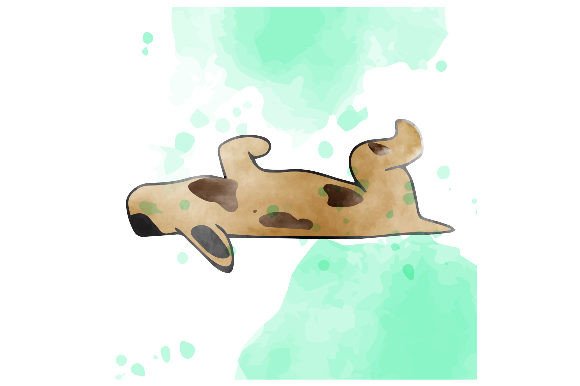
Watercolor Dog Doing a Trick
A Designer’s First Look: Playful, Loose, and Full of Personality
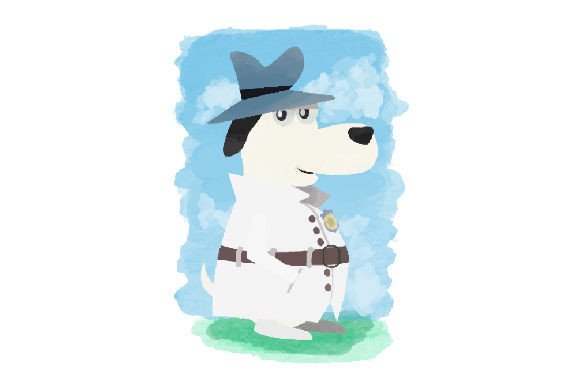
When Watercolor Dog Doing a Trick landed in my inbox, I opened it expecting charm—and got something more: a design that breathes. It’s not tight or hyper-detailed. It’s fluid, gestural, with soft edges and implied motion—like a pup mid-backflip or balancing a treat on its nose. The watercolor effect isn’t literal embroidery; it’s translated through smart stitch layering and intentional negative space. That means this isn’t a design for rigid satin-stitch perfectionists. It’s for makers who value expressive handmade character over clinical precision.
Real Project Test: A Custom Embroidered Tote for a Local Dog Rescue Pop-Up
Last week, I prepped a batch of canvas tote bags for a weekend fundraiser. I chose Watercolor Dog Doing a Trick as the centerpiece—not because it was “trendy,” but because it matched the event’s warm, community-driven vibe. On 12-oz natural canvas with medium-weight cutaway stabilizer, the design stitched cleanly at 4.2” wide. The fill stitches stayed breathable, the running-stitch outlines held shape without stiffness, and the slight variation in stitch density across the “watercolor wash” areas gave depth—not mushiness. Customers didn’t just smile; they paused. One asked, “Is that *your* dog?” That’s the power of this design: it feels alive, not templated.
Where It Shines (and Where to Pause)
Watercolor Dog Doing a Trick excels on structured, medium-to-heavy fabrics: sweatshirt fleece, denim aprons, linen pillow covers, cotton tea towels, and baby swaddles. Its open composition avoids overcrowding small hoop sizes—ideal for caps or infant onesies when scaled down to 3”. As a machine embroidery design, it balances detail and stitch efficiency: no tiny isolated elements that snag thread, no dense fill zones that pucker thin knits.
But be thoughtful with application:
- Stretchy fabric? Use tear-away + light cutaway stabilizer—and test first. The flowing lines rely on stable ground.
- Dark fabric? Check your thread colors. The design’s softness reads beautifully in heather gray or navy—but only if your top thread has enough contrast. A pale yellow or cream works better than stark white on black.
- Curved surfaces (caps, sleeves)? Hoop carefully. The upward curve of a cap bill flattens the bottom edge slightly—so position the dog’s “trick” facing forward, not tilted.
- Frequent-wash items (baby clothes, kitchen towels)? Confirm your thread is polyester or rayon, and use quality stabilizer. The watercolor illusion holds up—but only if the foundation stays intact.
What This Design Says About Your Brand—Without Words
When you use Watercolor Dog Doing a Trick on an Etsy listing, boutique shelf, or craft fair table, it quietly communicates three things: craftsmanship, warmth, and intention. It doesn’t scream “mass-produced.” It says, “This was chosen—not just placed.” That builds trust with buyers seeking personalized gifts or meaningful handmade products. For small shop owners, it elevates a basic tote or sweatshirt into something emotionally resonant. For wedding or holiday embroidery, it adds lighthearted charm without cliché. And for digital product sellers? Its clean SVG and transparent PNG files make it easy to drop into printable mockups—no background cleanup, no jagged edges.
Practical Designer Notes You’ll Actually Use
Before stitching your first Watercolor Dog Doing a Trick project, do these five things:
- Test on scrap fabric—same weight and weave as your final piece. Watch how the “wash” areas behave under tension.
- Review stitch density in your embroidery software. If fill zones look overly dense, reduce density by 5–8% for breathable results on apparel.
- Confirm hoop size compatibility. This design scales well, but avoid going below 2.8” without checking small details like paw definition or trick prop clarity.
- Try black-and-white mockups. Does the shape still read clearly? Does the gesture hold up without color context? (It does—this one passes.)
- Verify licensing terms. Since you receive SVG, Transparent PNG, EPS, and DXF files, confirm whether commercial use is included—especially if selling finished embroidered patches or digital embroidery files.
Final Thought: Not Just a Dog—A Moment Captured
There are hundreds of dog embroidery files online. Most show sitting, standing, or barking. Watercolor Dog Doing a Trick shows joy in motion. That makes it unusually versatile: perfect for a child’s backpack, a vet tech’s apron, a rescue organization’s merch line, or a custom baby embroidery set where whimsy matters more than realism. It won’t replace a photorealistic portrait—but it doesn’t need to. What it delivers is authenticity, ease of execution, and quiet confidence in every stitch. If your craft business values storytelling over symmetry, this design earns its place in your embroidery project rotation.