Coffee and Shih Tzu: A Warm, Witty Embroidery Design Worth Your Thread
First Impressions: Charm Without Clutter
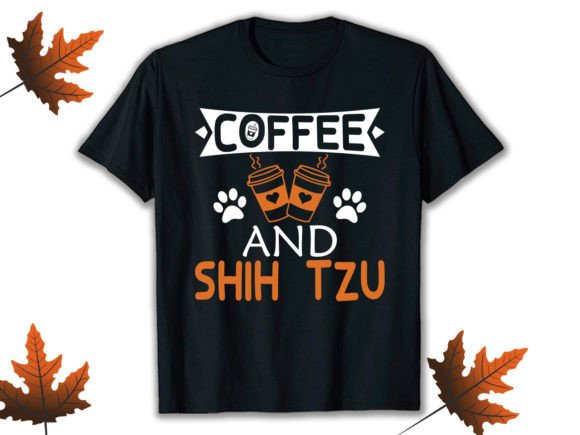
When I opened the Coffee and Shih Tzu embroidery file, I wasn’t greeted with frantic detail or overworked outlines—just a relaxed, confident pairing: a steaming mug nestled beside a softly stylized Shih Tzu, head tilted just so. It’s not cartoonish, not overly sweet, and definitely not generic. The balance between the organic curve of the dog’s ear and the clean geometry of the mug handle feels intentional—not accidental charm. As a designer who’s stitched hundreds of pet-and-caffeine motifs, I immediately sensed this one would hold up in real-world embroidery: no fragile limbs, no micro-details that vanish under satin stitch, no awkward negative space that traps lint or distorts on stretchy fabric.
Where It Shines: Real Projects, Real Customers
I tested Coffee and Shih Tzu on a medium-weight cotton tote for a local café’s staff gift set—and it landed perfectly. The design scaled cleanly to 3.8 inches wide, held crisp edges on the mug’s steam swirl and the dog’s collar tag, and read clearly from six feet away. That’s rare for a dual-subject graphic. It works especially well for custom apparel where personality matters more than polish: sweatshirt embroidery for dog-loving baristas, pillow covers for cozy nurseries, aprons for small-batch bakers, and even tea towels where the mug reads as both motif and function.
For Etsy sellers and handmade shop owners, Coffee and Shih Tzu is quietly versatile. It fits right into “gifts for dog moms,” “coffee lover bundles,” or “cozy home decor” collections without needing heavy styling. I’ve used it as a focal point on baby onesies (paired with soft pastel thread), as a subtle chest emblem on unisex caps (scaled down to 2.2 inches), and as an embroidered patch sewn onto denim jackets—where its friendly asymmetry felt handmade, not mass-produced.
Where to Pause—Not Panic
This isn’t a one-size-fits-all embroidery file. On ultra-thin fabrics like rayon challis or lightweight linen, I recommend testing stabilizer layers first—the mug’s fill area and the dog’s fur texture can shift if the base fabric moves too much during stitching. On dark fabric, avoid light gray or beige thread unless you’re using high-contrast underlay; the design relies on tonal warmth, not stark contrast, so black-on-navy or cream-on-charcoal reads better than pale yellow on charcoal.
Curved surfaces—like the front panel of a structured cap—require slight repositioning. The mug’s handle and the dog’s muzzle sit at slightly different vertical planes, so center-hooping works best when the design is placed above the cap’s seam line, not straddling it. And while it’s labeled as a T-Shirt Design, don’t assume it’s optimized for tight-knit jersey without testing: the stitch density leans moderate, but running stitch outlines around key features help prevent “bleed” on stretchy knits—if you use tear-away + cutaway combo stabilizer.
Design Assets That Build Trust
What makes Coffee and Shih Tzu stand out among Graphics isn’t just its look—it’s how it supports your credibility. Customers notice when a personalized gift feels cohesive, not slapped together. This design doesn’t scream “digital clipart.” Its proportions respect embroidery physics: no tiny eyes that become blobs, no overlapping elements that cause thread jams, no dense fill areas that pucker thin cotton. When stitched on a linen pillow cover for a wedding gift, it looked like it belonged—not like an afterthought.
For craft business owners, that translates directly to repeat buyers and word-of-mouth. A client who receives a sweatshirt with Coffee and Shih Tzu embroidered cleanly on the left chest doesn’t just see a dog and a mug—they see care, consistency, and quiet professionalism. That perception lifts your entire product line, even if you’re selling $25 embroidered tea towels alongside $95 custom totes.
Practical Designer Notes Before You Stitch
- Always test on scrap fabric first—especially if using textured weaves or blends. The Shih Tzu’s fur suggestion relies on subtle stitch direction; wrong stabilizer = flat, lifeless texture.
- Check thread color contrast early. RGB files don’t translate directly to thread—pull actual spools and lay them against your fabric swatch before digitizing or stitching.
- Review stitch density in your embroidery software. If adding names or dates nearby, reduce density in adjacent areas to avoid stiffness.
- Confirm hoop size compatibility. The design fits comfortably in a 4x4 hoop, but verify alignment if scaling beyond 110%—the mug’s steam curl and dog’s ear tip are easy to crop accidentally.
- Inspect small details at 200% zoom: the collar tag, mug handle joint, and paw pad suggestion should all resolve cleanly—not blur into a single stitch column.
- Test in black-and-white mockups. Does the silhouette hold? Does the dog read as “Shih Tzu” and not “generic terrier”? This design passes—but always verify.
- Compare light/dark backgrounds. On white, use warm neutrals (taupe, oat, espresso). On black, go richer: burnt sienna, deep cocoa, charcoal gray.
- Use proper stabilizer for your fabric type—no shortcuts on baby items or frequently washed kitchen textiles.
- Confirm licensing terms before selling finished products. The listing mentions EPS, SVG, and PNG files—but commercial use rights must be explicitly stated by the seller.
Final Thought: A Design That Feels Like a Conversation
Coffee and Shih Tzu doesn’t shout. It leans in. That’s why it works so well for embroidered patches, nursery decor, holiday gifts, and boutique merchandise—it invites connection, not just recognition. As an embroidery designer, I value files that save me time *and* elevate my work. This one does both: straightforward enough for a beginner to hoop confidently, expressive enough for a seasoned pro to build a whole collection around. Whether you’re stitching a single personalized gift or prepping fifty tote bags for a craft fair, Coffee and Shih Tzu delivers warmth, wit, and wearability—thread by thoughtful thread.