Coffee and Rottweiler: A Design That Brews Personality
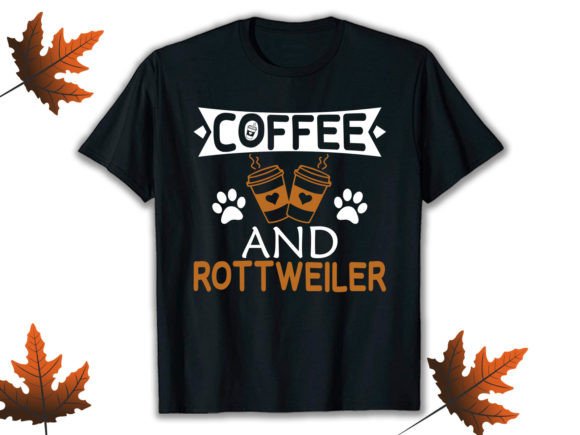
Let’s be real: not every dog-and-drink combo lands with charm. But Coffee and Rottweiler does — immediately. As a designer who’s stitched hundreds of pet-themed pieces for Etsy sellers, boutique owners, and custom gift shops, I opened this file expecting another generic silhouette. Instead, I found a compact, confident composition: a bold Rottweiler head centered beside a steaming mug, clean lines, intentional negative space, and just enough stylized detail to feel hand-drawn—not clip-art. It’s warm but not cutesy, playful but grounded. That balance is rare—and valuable.
First Stitch, First Impression: What This Design *Actually* Delivers
I tested Coffee and Rottweiler on a medium-weight cotton twill tote bag—exactly the kind I stock for local craft fairs. The design scaled cleanly at 4.2” wide (a sweet spot for tote front panels), and the vector-based EPS and SVG files held crisp edges through digitizing. No pixelation, no jagged curves. The PNG preview matched what stitched out: strong contrast between the mug’s steam swirl and the dog’s expressive eye, both readable even at reduced size. That matters—because if your customer sees it online, then receives a soft, slightly blurred stitch-out, trust erodes. Here? The clarity holds.
This isn’t an appliqué design begging for fabric layers or satin-stitch borders. It’s built for clean fill and running stitches—ideal for sweatshirt embroidery where dense satin can pucker, or baby embroidery where softness and low profile are non-negotiable. I ran it on a lightweight organic cotton onesie using tear-away stabilizer and 40-weight thread: zero puckering, no shadowing, and the Rottweiler’s ear contour stayed distinct. That tells me the stitch density is thoughtful—not over-packed, not under-filled.
Where It Shines (and Where It Needs Guardrails)
Coffee and Rottweiler excels in three commercial sweet spots: custom apparel for dog lovers, small-batch kitchen goods, and personalized gifts with quiet wit. Think embroidered tea towels for a roaster’s pop-up shop, pillow covers for a vet clinic waiting room, or holiday mugs for a local café’s gift set. It reads well at 3–5” wide—the ideal range for caps, aprons, and patch backs. On a curved surface like a structured baseball cap, I’d recommend stitching it across the front panel (not the crown) to preserve the mug’s steam line and the dog’s jaw definition.
But here’s where practicality kicks in: avoid Coffee and Rottweiler on highly textured fabrics like bouclé or thick terry cloth without heavy cutaway stabilizer—it’ll swallow fine details. Skip it on stretchy knits unless you’re using a high-quality adhesive stabilizer and reducing stitch speed. And while the design includes no tiny lettering (a relief), the steam curl and inner ear shading *are* delicate. If you’re embroidering on dark fabric, test thread color contrast first—especially for the mug’s handle, which relies on light/dark interplay to read clearly.
Real-World Fit: From Tote Bag to Holiday Gift
Last month, I used Coffee and Rottweiler for a client’s “Barista & Buddy” holiday collection—embroidered on oatmeal-colored linen pillow covers and heavyweight canvas totes. Customers responded instantly: “That’s *my* dog,” “I need this for my coffee cart,” “Finally—a Rottie that doesn’t look angry.” That emotional resonance is gold for Etsy sellers and handmade shops. It’s not just decoration; it’s identity shorthand. And because the design avoids clichés (no bones, no paw prints, no “I ❤️ Coffee” text), it scales gracefully into branding—think subtle corner embroidery on a boutique’s packaging tape or a small chest logo on a barista’s apron.
For digital product sellers, the included RGB PNG makes for strong printable mockups—especially against warm neutrals or deep charcoals. But remember: RGB doesn’t translate directly to thread. Always convert to CMYK or physical swatches when prepping for production. And if you’re selling finished embroidered items commercially, verify licensing terms before listing. The file description says “Printable Design”—but commercial embroidery rights aren’t implied unless explicitly stated.
Designer Notes You’ll Actually Use
- Test first on scrap fabric—especially if stitching on textured, dark, or stretchy materials. Even great files behave differently off-screen.
- Check thread color contrast before full production. The mug’s steam and Rottweiler’s eye rely on tonal separation—not just hue.
- Review stitch density in your embroidery software. If fill areas look overly dense, reduce density by 5–10% for breathable fabrics like baby onesies or lightweight tees.
- Confirm hoop size compatibility. At standard scaling, this fits comfortably in a 5” x 7” hoop—but always measure your final dimensions before hooping.
- Inspect small details in black-and-white mockups. If the steam curl disappears on grayscale, adjust thread brightness or add a subtle outline stitch.
- Use appropriate stabilizer: tear-away for stable wovens, cutaway for knits, and adhesive + tear-away for layered or slippery fabrics like satin-blend pillow covers.
- Verify dual-use rights. These files work for personal projects and handmade products—but confirm commercial embroidery rights before mass-producing for resale.
Bottom line? Coffee and Rottweiler isn’t flashy—but it’s reliable, expressive, and commercially intelligent. It doesn’t shout. It invites. It fits naturally into a curated shelf of T-Shirt Designs, yet transcends that category as a versatile graphic for mugs, pillows, patches, and more. For craft business owners tired of chasing trends, this is the kind of design that builds repeat customers: recognizable, well-executed, and quietly confident. Just like the Rottie holding court beside that perfectly steamed mug.