Dog Hair Don’t Care
A Quick First Impression
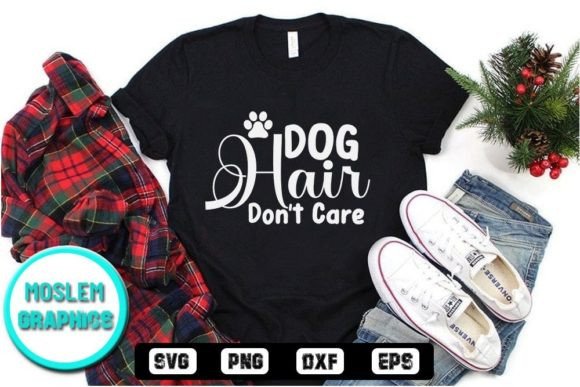
The first time I saw Dog Hair Don’t Care, I was struck by its bold simplicity. The design is clean, with a strong visual personality that immediately communicates the phrase’s attitude. It feels like something you’d see on a vintage T-shirt or a patch for a dog lover’s gear. The layout is straightforward, with the text centered and framed in a way that suggests it could work well as a standalone piece or part of a larger design.
Real-Life Scenario: Custom Embroidered Tote Bag
Let’s imagine a scenario where I’m preparing a custom embroidered tote bag for a local pet store. The client wants a fun, eye-catching design that appeals to dog owners. Dog Hair Don’t Care fits perfectly here. The text is large enough to be readable from a distance, and the overall aesthetic is casual and approachable. It would look great on a tote bag, especially when paired with a colorful fabric or a neutral background.
I can already picture this design on a canvas tote, paired with a small applique of a dog or paw print. The combination would create a playful yet professional look. However, I would consider the placement of the text carefully to ensure it doesn’t get lost in the pattern or color of the fabric.
Performance in Real Embroidery Situations
Dog Hair Don’t Care is versatile enough to work across multiple embroidery applications. On a T-shirt, it looks sharp and modern. On a sweatshirt, it adds a touch of humor without overwhelming the garment. For a baby item, the design could be scaled down and used as a subtle detail rather than the main focus. On a cap or hat, the text needs to be positioned so it doesn’t stretch or distort during stitching.
It also has potential for holiday or seasonal items, such as a Christmas gift or a birthday shirt. The design’s simplicity allows it to adapt well to different themes and color schemes. However, I would recommend testing it on a variety of fabrics before committing to a large production run. The texture of the fabric can significantly affect how the design appears after stitching.
Considerations for Careful Use
While Dog Hair Don’t Care is generally adaptable, there are some scenarios where it might not perform as well. For instance, using it on small hoop sizes could result in a loss of detail, especially if the design includes intricate elements. Similarly, textured or stretchy fabrics may cause distortion, making the text appear uneven or stretched.
Dark fabrics can also pose a challenge, as they may reduce the contrast between the embroidery and the background. This could make the design less visible or harder to read. Likewise, layered garments or curved surfaces like caps require careful planning to avoid overlapping stitches or misalignment.
Another consideration is the use of tiny lettering or dense stitch areas. While Dog Hair Don’t Care doesn’t feature these elements, it’s worth noting that any design with fine details should be tested thoroughly. A quick mockup or test stitch on scrap fabric can save time and prevent costly mistakes.
Visual Appeal and Product Value
The visual appeal of Dog Hair Don’t Care is strong, but it’s important to remember that appearance alone doesn’t determine product value. Customers will judge the quality of your work based on how well the design holds up after stitching and how it looks on the finished product.
Stitch clarity is crucial, especially for handmade products and personalized gifts. If the design lacks definition or appears blurry after stitching, it can damage customer trust and reduce the perceived value of your work. Testing the design on a variety of fabrics and checking stitch density can help ensure the final result meets expectations.
For commercial projects, consistency is key. Whether you’re creating Etsy listings, boutique branding, or printable mockups, the design should maintain its integrity across different formats and applications. Ensuring brand consistency helps build recognition and professionalism, which are essential for long-term success.
Practical Designer Notes
Before using Dog Hair Don’t Care in a real project, I recommend a few practical steps. Start by testing the design on scrap fabric to see how it looks under different conditions. Check thread color contrast to ensure visibility, and review stitch density to avoid over-stitching or under-stitching.
Confirm the hoop size required for the design, and don’t forget to use proper stabilizer, especially on delicate or stretchy fabrics. Inspect small details carefully, and test the design in black and white mockups to identify any potential issues with contrast or readability.
If you plan to sell finished items or digital products, always confirm licensing terms before proceeding. Make sure the design works for both personal and commercial projects, and consider how it might fit into your broader brand or product line.
Final Thoughts on Dog Hair Don’t Care
Dog Hair Don’t Care is a solid choice for designers looking for a versatile, easy-to-use embroidery file. Its clean design and strong visual personality make it suitable for a wide range of applications, from custom apparel to holiday gifts. However, like any design, it requires thoughtful consideration and testing to ensure it performs well in real-world situations.
Whether you’re an Etsy seller, a small shop owner, or a hobbyist, taking the time to evaluate and test your designs before production can make all the difference. With the right approach, Dog Hair Don’t Care can become a valuable asset in your creative toolkit.